


 1588
1588 0
0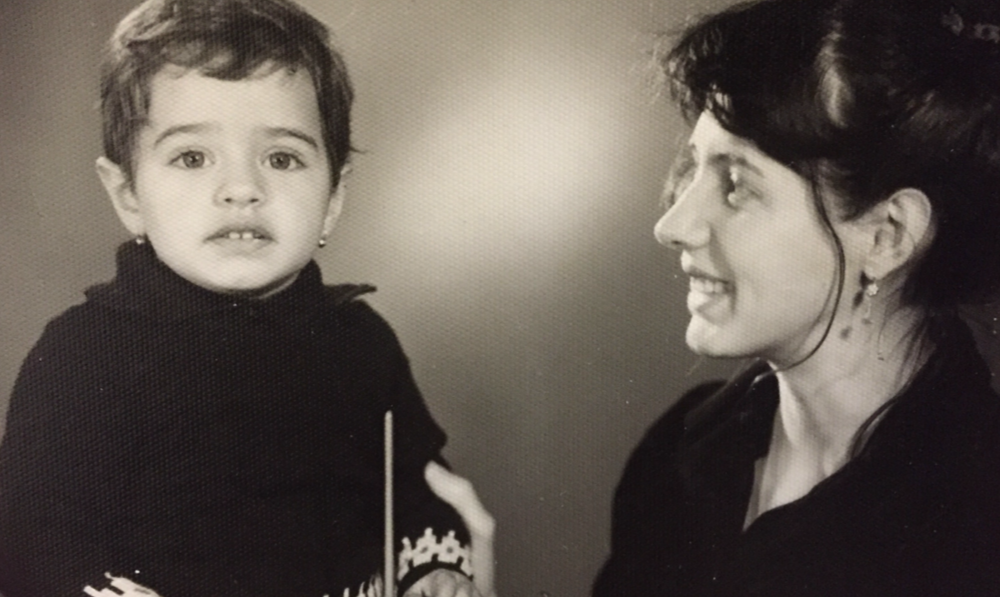
She was always there by the tram stop, the young Roma woman with the twisted leg, begging. She seemed like a woman to me then, but looking back, I realize she was just a teenager.
Most people walked past her, eyes fixed straight ahead, ears closed to her quiet plea.
But I couldn’t not see her.
I was just a child, but something in me bristled at the silence of indifference. I would tug at my mother’s sleeve and ask for something to give: a few coins, a piece of bread we had waited in line for, something, anything.
And my mother, who had little herself and knew how precious every bite was, always found something.
She understood what I only began to learn then: that doing the right thing doesn’t begin when it’s convenient. It begins the moment we see suffering and choose not to look away.
That young woman, to my child’s imagination, became a reflection of the Little Match Girl.
If you’ve never read Hans Christian Andersen’s story, I urge you to. It’s not simply a tale of tragedy; it’s a moral reckoning.

The Little Match Girl is sent out barefoot into the snow on New Year’s Eve, tasked with selling matches. She’s cold, hungry, and terrified of going home empty-handed. So, she crouches between two buildings and lights her matches, one by one, not for warmth, but for the fleeting illusion of comfort: a glowing stove, a roast goose, a dazzling Christmas tree, the gentle embrace of her grandmother.
By morning, she is found frozen to death in the street, spent matches at her side.
In Romania, during brutal Communist winters, our electricity and heat were often cut. My mother would pull us into bed under heavy comforters and tell us that story. And always, I cried. Because we knew what it was to be cold. But we were together. We had food in our bellies. We were safe.
The Little Match Girl had none of that.
Her story stayed with me, not just as sorrow, but as a question:
How do we let children freeze to death in the street?
How do we harden ourselves to the hungry, the scared, the cast-aside?
I’m asking that question again because we are failing those same children now.
In Gaza, children are dying trying to find scraps of food for their families. In Georgia, school meal programs are often the only reliable nutrition children receive, and during school breaks, many go hungry. Local pantries are running out of food. SNAP benefits are being slashed. Fresh produce is vanishing from the shelves of places that once gave it freely.
And in one of the most stunning acts of bureaucratic cruelty I’ve seen, the U.S. government recently ordered the destruction of nearly 500 metric tons of high-nutrition biscuits, enough to feed over a million children for a week. The food was purchased, paid for, and stored for children in Afghanistan and Pakistan. But instead of distributing it, the shipment sat unused. Officials declared it a “potential benefit to terrorists,” and the order came down: burn it. Not redirect. Not repurpose. Burn it. Now, past its safe date, it can’t even be used as animal feed. And taxpayers will foot the bill for its destruction.
How did we become a people who destroy food while children starve?
Where is our courage?
Growing up under a dictatorship, we had very little, but we shared it. My grandmother fed anyone who knocked on her door, even if it was just leftover mămăligă or a heel of bread with lard. Because need was need. No one had to prove they were “worthy.” No one was too much a stranger, too suspicious, or too inconvenient to be fed.
That is what courage looks like.
Not bravado.
Not posturing.
Quiet, every day, defiant compassion.
And it’s disappearing.
In a culture obsessed with self-interest and tax breaks, the hungry child becomes someone else’s problem. The undocumented parent, torn from their family, becomes a “law enforcement matter.” The refugee is dehumanized. The homeless are hidden or harassed. And those who dare to care? Mocked as soft, naïve, bleeding hearts.
But here’s the truth:
It takes more courage to care than to look away.
And courage is contagious.
When one child asks to donate their lunch money for a classmate in need, others follow. When one family shops for two instead of one, knowing their neighbor is struggling, that ripple spreads. When someone shares extra tomatoes from their garden, it multiplies. When we teach our children to see the hurting, and not cross the street to avoid them, we build something stronger than policy.
We build community.
We are still one of the most generous nations in the world. But that spirit is under siege, from cruelty, from cynicism, from apathy. We must fight to protect it.
The Little Match Girl still crouches in the cold, right here, right now.
She is the child in the field, crying for the crop-harvesting parents who were just picked up.
She is the child in Gaza, trembling from hunger.
She is the child in Georgia, staring at an empty pantry shelf.
Will we see her?
Will we feed her?
Will we fight for a world in which no child freezes alone in the dark?
We can.
But it starts with courage.
Let ours not fail us now.
Let the Little Match Girl serve as our reminder of the immense power of love, empathy, and human connection.
And the light that flickers, even now, in the match she still strikes against the wall.








Leave a Comment
You must be logged in to post a comment.