


 4053
4053 8
8
Every couple of years, Peachtree City voters decide who will help shape our community’s future. With November’s election on the horizon, the race is starting to take shape.
Here are the individuals who have so far declared their intent to run for office:
- Mayor – Kim Learnard (Incumbent) and Eric Imker
- Councilmember Post 3 – Clint Holland (Incumbent) and Joseph Campbell
- Councilmember Post 4 – Michael Polacek, Timothy Eden, and James Clifton
Among those running for Post 4, James Clifton has arguably been the most visible candidate so far, having launched a website and announcing his run on The Citizen. After he announced his candidacy, I reached out to learn more about him. I offered a range of times and suggested we connect over video to keep the process easy and flexible.
My goal for the meeting was simple. I wanted to hear his perspective directly. I wanted to ask follow-up questions, deeply understand the reasoning behind his positions, and give him space to expand and clarify points he has raised in public settings. This is the same approach I take with every person I want to speak with when the topics are complex. I wanted to have a real exchange that could help me better understand his perspective.
Clifton declined my request for a direct conversation. Instead, he insisted my questions be submitted in writing and said he would respond only in writing. I reiterated the value of a real-time exchange, but he ultimately chose not to move forward. This decision came even though he has participated in interviews with other outlets and has publicly stated, “You can call me… I’ll talk to anybody.”
Even without the opportunity to speak directly, I still wanted to understand where he stands. So I turned to what’s publicly available—his campaign materials, interviews, and statements.
What I found was concerning.
Clifton’s platform includes multiple claims that are either misleading, exaggerated, or flat-out wrong. And that’s not just a problem for his candidacy. It’s a problem for all of us. When candidates build their case for public office on shaky facts, it makes it harder to solve real problems and it leaves voters to sort out truth from fiction.
This article isn’t personal. It’s about his approach to issues and whether his ideas are grounded in reality.
So with that in mind, let’s dive into Clifton’s platform. Let’s compare it against what’s happening in our community and see how it holds up. Because every campaign is a test of leadership, and leadership starts with being honest about the challenges we face.
Claim: Citizens Are Being Silenced at Council Meetings
On his website, Clifton makes this one of his main issues. “Clifton is concerned about the heavy restrictions on citizens who want to speak at council meetings, where citizens are sometimes restricted to less than one minute to speak. He believes elected officials should encourage open dialogue and ensure every voice is heard.”
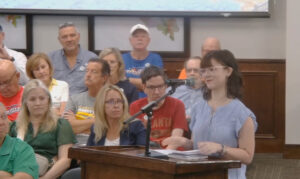
This concern is not without precedent. On July 12, 2022, during a special-called City Council meeting, 22 people signed up to speak during the 20-minute public comment period. As a result, the time was divided equally among them, and each speaker was initially allotted just 52 seconds. That approach was permitted under the city’s ordinances at the time, which capped public comment at 20 minutes.
But since then, the city’s policy has changed.
In August 2024, Peachtree City revised Section 2-35 of its municipal code to improve public access and strengthen transparency. The updated ordinance now provides each speaker with up to three minutes and allows a total of 30 minutes for public comment during regular meetings. If more time is needed, the City Council can vote to extend the comment period. In practice, the city has done just that. On November 21, 2024, when 20 speakers registered to address the Council, the session was proactively extended to one hour to ensure everyone had time to speak.
Peachtree City’s current policy now matches or exceeds standards in nearby cities. Clifton’s original concern reflected a real issue from 2022. But that issue was addressed by the City Council almost a year ago, and the ordinance has since been updated to protect the very values he says he supports.
As a result, Clifton’s claim overlooks important changes that have already been implemented and gives voters the wrong impression about how public input is currently handled.
Claim: The City Is Spending Recklessly
In both a recent interview and his campaign announcement letter, Clifton paints a picture of financial mismanagement at City Hall. He accuses leaders of approving “bloated budgets” and claims Peachtree City “has found every way they can to spend every last dime that comes in.”
These are strong accusations. But these claims do not hold up to scrutiny.
Clifton is correct that Peachtree City’s budget has grown in recent years, but that reflects increased demand for essential services and rising costs tied to inflation, employee healthcare, public safety staffing, and more. The city’s most recent $60 million budget allocates nearly half of the general fund to police, fire, and EMS. These are not luxuries. They are the basic responsibilities of the government that residents expect every day.
Peachtree City’s financial stewardship has also been independently validated. In 2023, Moody’s Investors Service awarded the city a AAA bond rating, citing strong fiscal management and long-term stability.
Meanwhile, Clifton has not presented a detailed alternative to the city’s current approach. He gestures broadly at government bloat but hasn’t identified specific cuts or explained how he would sustain services with reduced funding. Until he does, his critique reads more like a political posture than a practical plan.
Claim: The City Is Imposing Record Tax Increases
In his campaign materials, Clifton warns of “record tax increases,” implying that Peachtree City is aggressively raising taxes and placing an unnecessary burden on residents. He argues that the city should instead “return tax dollars directly to the people of Peachtree City.” While this framing may strike a chord with fiscal-hawk voters, it misrepresents how property taxation actually works and what city officials have done to manage the impact.
The key distinction is between property assessments and tax rates. Property values in Fayette County have risen in recent years, and that affects the assessed value of homes. But these assessments are set by the county, not by Peachtree City. The city controls only the millage rate which determines how much tax is applied to those assessed values. In fact, Peachtree City’s elected officials voted to lower the city’s portion of the millage rate from 6.043 to 5.983 as part of the FY2025 budget.
Peachtree City’s overall tax burden also remains competitive compared to nearby municipalities. Our combined city and county millage rate is 9.956. By comparison, Fayetteville’s rate is 10.619 and Tyrone’s is 10.682. Peachtree City also offers more in terms of services than many of its peers, including more than 100 miles of multi-use paths, a full-service police and fire department, and a great library.
In short, while some residents may be paying more due to rising home values, Peachtree City has not imposed a “record tax increase.” On the contrary, City Council took concrete steps to reduce the tax rate and keep costs down while continuing to deliver high-quality services.
Claim: The City Is Ignoring Park Maintenance While Advancing a $150 Million Recreation Plan
On Clifton’s website, he states that our city’s government is proposing “$150 million for new recreation projects, when the city cannot afford to maintain its current venues and parks.”
I’ve written about our city’s 2025 Parks & Recreation Master Plan in the past. I’ve extensively read the plan, reviewed minutes where it was discussed, and spoken to city officials about its creation and adoption.
At no point has a $150 million price tag been proposed or approved.
Where Clifton got that number is unclear. It does not come from a verified or official source, and it misrepresents what the plan actually is: a long-term strategic guide to help prioritize future needs, not a lump-sum spending proposal.
As for the idea that the city is neglecting park maintenance, the record shows otherwise. In 2022, the city built a brand-new All Children’s Playground after the previous equipment reached the end of its life. In 2023, the long-overdue replacement of the Riley Field track was completed. This past May, the city replaced the roof at the Kedron Fieldhouse. And upcoming projects include new lighting for our ballfields and paving work at the Peachtree City Athletic Complex.
The Parks & Recreation Department manages these efforts with a maintenance and operations budget that makes up about 10% of the city’s annual expenditures. They’ve done a commendable job with the resources available and don’t deserve the kind of inaccurate criticism Clifton is leveling.
That said, there’s still more recreation improvements to be done. That’s why we have the Parks & Recreation Master Plan—to prioritize future improvements, guide smart investments, and ensure our recreation services meet the needs of our community.
Our recreation services deserve thoughtful leadership, not distorted claims from someone seeking office.
Claim: Unchecked Population Growth Is Harming Peachtree City
Clifton’s website says that he wants to “preserve neighborhood character, enhance safety, prevent schools from being overburdened, and city services from being exhausted by unchecked population growth.” He cites the 2022 Comprehensive Plan for fueling this population growth with high-density housing and wants to reinstate the previous plan.
But blaming the Comprehensive Plan for harming our city doesn’t hold up when you look at the details.
According to the U.S. Census Bureau, Peachtree City’s population was 38,244 in 2020. Official federal figures for 2025 are not available since the next census is in 2030, but if third-party figures are correct, Peachtree City’s 2025 population is 41,504—an increase of roughly 8.5% since 2020.
So what’s driving that growth? The answer is a combination of factors:
- New Single-Family Homes: While the city is mostly built out, new subdivisions have been approved and built in recent years along MacDuff Parkway (notably with Cresswind and Everton). This will continue to be a factor in the short-term as new homes become available on Redwine Road, in Governor’s Square, and in the recently-annexed 52-acres around Stagecoach Road.
- Empty Nesters Giving Way to Families: Many longtime residents who raised children here are downsizing, moving away, or transitioning into senior living. Their homes are being purchased by younger families with kids. That natural turnover can increase the average household size and drive our population up.
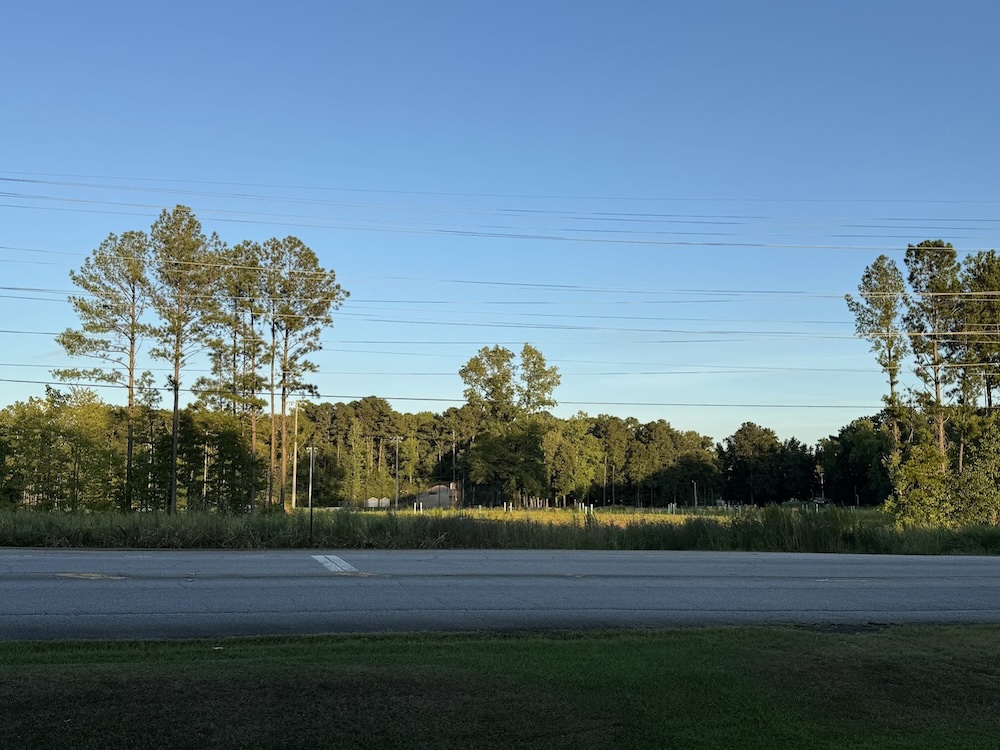
- New Townhomes: Over the past few years, Peachtree City has approved several townhome developments. These projects are often built on underutilized parcels, but their quantities have been very limited. Some that have been approved haven’t even been built. For example, here are the townhomes on Rockaway Road initially approved in 2020:
- Annexation Of Already-Developed Parcels: Besides the Stagecoach Road annexation, we also annexed already-developed property north of Governor’s Square. Some of this was residential, but it also included commercial properties that grew the city’s revenue.
What’s missing from this list is the 2022 Comprehensive Plan. When passed, it contained no mandates to increase density or rezone neighborhoods. Instead, it reaffirmed Peachtree City’s longstanding Village Concept, called for the protection of green space, supported cart path connectivity, and placed an emphasis on redevelopment over expansion.
In fact, the plan emphasized that any new residential development should occur in areas with appropriate infrastructure and zoning, and it discouraged growth that would strain city services, conflict with land use goals, or depart from established development patterns. Those guidelines have led to proposed high-density apartments aimed at seniors to be rejected along Aberdeen Parkway and Walt Banks Road.
That said, the plan did introduce “mixed use” as a new parcel type—allowing, in theory, a combination of residential and commercial uses on the same site. But that shift has had no impact on population growth. To date, only one mixed use development has been approved under this designation: Royal Views, located in Aberdeen Village with $950,000 condos. And as of now, it hasn’t been built and has so far grown our population by zero people.
When complete, Royal Views will include just 12 condominiums above ground-floor retail. Even if you assume an average of four residents per unit—which is high for a condo product—it would add just 48 people to the city’s population. That’s 0.1% of Peachtree City’s population. And there are no other mixed use projects currently approved or for consideration.
So, has this modest growth harmed our community?
More people would impact any community, but for Peachtree City, the impact has been limited and is being addressed. The city has aggressively improved infrastructure, upgraded cart path crossings, and coordinating with GDOT to improve the 54/74 intersection (though I argue more needs to be done for that intersection). Parks and recreation are being guided by the approved long-term master plan. A contact within the school system confirmed with me that attendance numbers for 2025-2026 will meet their forecast and not disrupt their plans.
Meanwhile, the more dramatic markers of “unchecked growth” simply haven’t materialized. Peachtree City remains one of Georgia’s safest cities. We were just called one of the nation’s best small towns for raising a family. Our parks and green spaces are intact. Our neighborhoods remain quiet, stable, and highly desirable. City services have kept pace, and the FY2026 budget is pacing to preserve our quality of life without raising the millage rate.
Peachtree City continues to grow similar to our neighbors. There’s no population explosion, no runaway expansion, and no evidence that the 2022 Comprehensive Plan has “exhausted” city services or “overburdened” our schools.
If anything, we’re achieving exactly what the plan calls for: planning responsibly and preserving what makes Peachtree City Peachtree City.
We Deserve Reality From Our Candidates
We’re about to enter a period where people who want to lead our community will make their case to voters. Some will offer thoughtful, fact-based proposals. Others, unfortunately, will rely more on emotion, exaggeration, or outright falsehoods.
When I introduced myself as a columnist for The Citizen last November, I said I wanted to help strengthen this paper’s role as a trusted source of information and discussion. That remains my guiding principle. I try to present facts clearly, cite sources, and give readers the tools to understand what is happening in our community. Whether or not I succeed is up to you, but that’s the standard I hold myself to.
As part of that pledge, when someone who wants to shape public policy has a platform built on false or misleading claims, I believe it is important to call that out. Not as a personal attack, but as a matter of accountability.
Post 4 Candidate James Clifton has introduced himself with a platform that does not hold up to scrutiny. I don’t believe he’s being intentionally dishonest—but he is wrong. Perhaps he hasn’t done his research on the city. Or perhaps he has a bad advisor informing his campaign.
If he intends to be a serious contender, he has two options. Neither is easy:
- He can acknowledge that he made mistakes and revise his platform to reflect the realities of our community. People make mistakes all the time (including me). Owning them and making changes isn’t a weakness. It’s growth.
- If he’s unwilling to revise his platform to reflect reality, then he should step aside and make room for someone who will.
I don’t make these recommendations lightly. But our city deserves leaders who are honest, humble, and willing to identify problems and solutions with facts.
And while this article focuses on Clifton, let me be clear—I’d say the same about any other candidate pushing a platform like this, and if needed, I will make similar callouts through November.
So, if you are running for office, make the truth matter now. It’s going to be crucial for all of us after Election Day.
And if you see James Clifton out on the campaign trail, ask him about his platform. Don’t settle for broad talking points. Ask for facts.
I know I would.




Leave a Comment
You must be logged in to post a comment.