


 2687
2687 1
1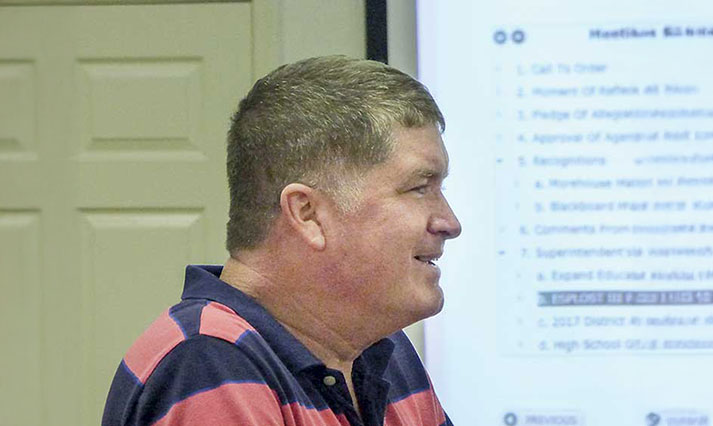
Recently, I was at a Braves game, and I had a thought during the in-game entertainment “Cap shuffle.” It is like my recent exploration of government funding and property taxes. First, it is important to note that the only beverage I had was Diet Coke.
In the cap shuffle, a fan can win prizes if they correctly identify which cap has the marker underneath. The fan is shown the marker being placed before the caps begin switching and shifting spots in a video. When they stop shuffling, the fan is asked which cap has the marker.
For homeowners, the marker is meaningful property tax relief or at least moderation of property tax growth. While some of our elected leaders at least make a showing of concern, actual results or even action shuffle and shift like those caps.
First, our state legislature agreed with voters that property tax growth needed guard rails and proposed to let voters set limits through HB 581. Interestingly, there was a provision that while voters can set limits, those who the limits were to be set upon could decide to veto it. In the case of the Coweta County School Board, they did exactly that after voters overwhelmingly approved the limits.
One reason for the veto was that the Coweta County School System (CCSS) administration felts they could not rely upon state funding as the legislature has a propensity of underfunding the Georgia school funding program called Quality Basic Education or QBE.
In these cases, the legislature will impose “austerity reductions” which are non-specific reduction taken from the formula driven funding result. Over the past two decades, combined, the Fayette and Coweta property owners have been forced to cover over two hundred million dollars each in austerity reductions. In this case, the legislature gets credit for “funding” popular programs even though they do not send the funds. One reason given for this practice is “high local reserves.”
First, CCSS will tell you that one reason they have fifteen percent reserves (Fayette is 10%) is because of these potential “austerity reductions”. However, they will also tell you that one reason why property taxes need to continue to grow without reasonable limits is also “austerity reductions” which over two decades averages five million a year against a now over three hundred million dollar budget or 1.6% per year.
Coweta homeowners should know however that the school millage has remained constant and relatively low over the past few years. Superintendent Evan Horton reminded the CCSS board during the HB 581 hearings that while the board controls the millage rate, the tax assessor is the one that assesses ever higher values. Therefore, by extrapolation, the Superintendent’s point is that the school board bears no responsibility for ever higher school taxes even though they control the millage.
At this point, reasonable people may wonder, if the school board doesn’t control the value of property, why do they get a say in limiting the value of property?
But like any exciting cap shuffle game, there is always a twist. After the Coweta County School Board vetoed the will of their constituents, there was an attempt by the board to offer an unserious alternative as local legislation in concert with the Coweta delegation of the Georgia legislature. Several citizens/groups also became involved to the point where no alternative to valuation limits advanced forward in the legislature.
The Coweta delegation members said that they could not advance a citizen proposal that was not approved by the CCSS board. However, they could not explain how the Fayette delegation advanced the LV7 homestead exemption (3% cap) as local legislation without coordination with the Fayette County Board of Education (FCBOE). I can promise the FCBOE never approved that limitation.
However, reserves are also be part of the “government shuffle.” While school boards were quick to veto HB 581 decisions by voters, other local governments were less so. While I understood the twenty-mil limit on school tax millage was part of the school’s concern, I was surprised by the number of local politicians who were comfortable with millage increases to offset rising costs and valuation limits on the municipal level.
I realized that those local politicians were less likely being cavalier about millage increases as they were willing to use reserves (60% in the case of Peachtree City) to offset shortfalls and put off the rising cost issues to another day and other leaders.
To be clear, I choose to believe that all involved are well meaning people and nobody is intending to mislead the property owners.
The problem is that no matter how many times the leaders swap blame or shift definitions, the homeowners are constantly left holding the bag unlike with other taxes where the taxpayer pays based on actual consumption (sales tax) or actual income (income tax). Property tax is the only instrument where the tax is based on an estimate and noncompliance can cost the taxpayer their home.
As property owners, we need to ask questions and hold elected leaders accountable. In the next two years, we will elect every state leader and many municipal/local leaders. We should find people who are willing to speak straight and address the financial issues head on. Georgia homeowners deserve a break.


Leave a Comment
You must be logged in to post a comment.